

If someone stopped replying without explanation, the message history may show when their participation changed, but it cannot reveal the private reason. Ghosting can come from avoidance, lost interest, overwhelm, another relationship or circumstances you never see. The honest answer is often that you do not know. You can still decide what respectful contact and closure look like for you.
First decide whether this is a pause or a pattern
People use the word ghosting for very different gaps. A few hours after a date is uncertainty. Several days after regular contact may be a change. Disappearing after an established relationship or a direct question is a more serious withdrawal. Compare the silence with the rhythm you had before it.
Check practical context once. Travel, illness, exams, caregiving and work can interrupt communication. Context is not an excuse for indefinite silence, but it can stop you from treating every delay as rejection.
What the earlier messages may show
Look for a gradual reduction in questions, shorter replies, repeatedly postponed plans or one person carrying every restart. You may also find no warning at all. Some people stay warm until the moment they withdraw because they have not communicated their doubts, not because you failed to decode a hidden clue.
Do not search the thread for a single sentence that makes the outcome your fault. Relationships are not puzzles with one secret correct answer. The other person had the option to communicate, even if the conversation would have been uncomfortable.
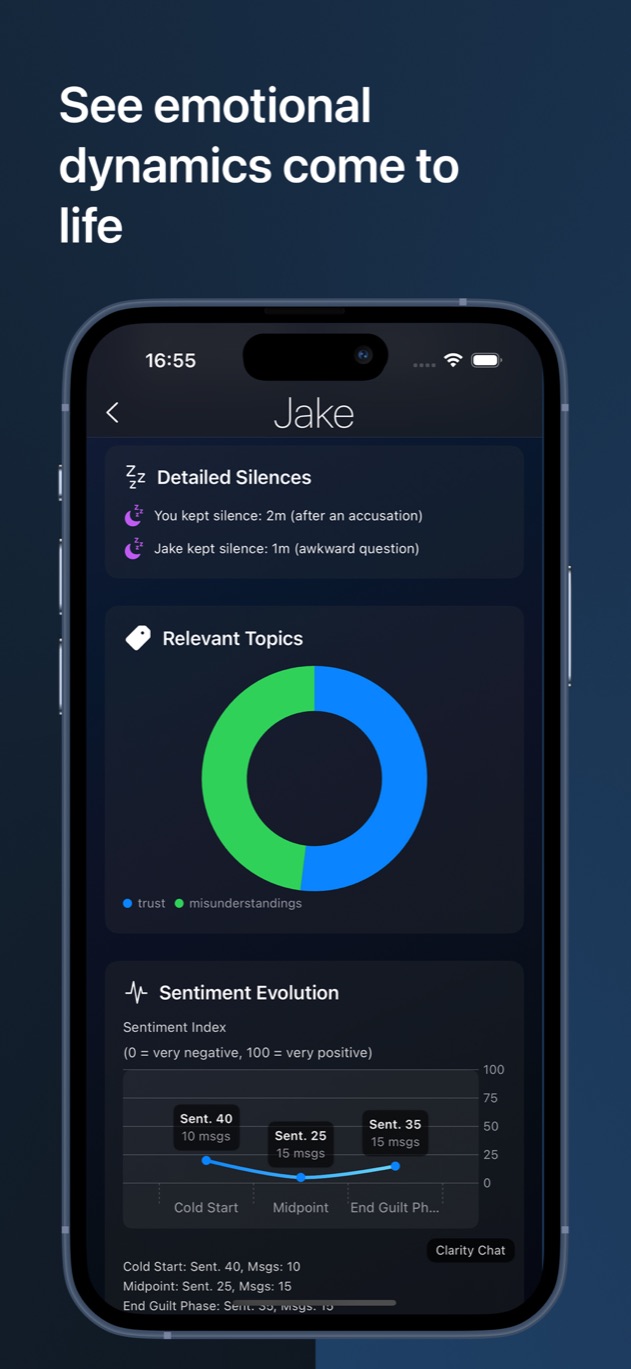
How Clarity Chat can help without pretending to know why
A Clarity Chat report can organize message balance, quiet periods, observed tone and sentiment changes in the screenshots you select. That may help you identify the point where the exchange changed or confirm that effort had become one-sided.
Use a sample from before the silence rather than only the final unanswered message. Read the examples and consider alternative explanations. No indicator should be translated into a claim that the person met someone else, feared commitment or planned to hurt you.
Choose one follow-up, if a follow-up is appropriate
If the relationship felt safe and there was no clear request for no contact, one concise message can create a clean endpoint: “I enjoyed getting to know you. I have not heard back, so I will step back. If you want to reconnect, please be direct.” You do not need to argue your case or send a series of escalating messages.
There are situations where no follow-up is wiser: the person blocked you, asked for space, behaved threateningly or repeatedly disappeared and returned without accountability. Respect their boundary and your own.
Closure can come from your decision
An explanation would be kind, but you may not receive one. Closure can mean accepting the observable fact that communication stopped and choosing not to remain on standby. Mute the thread, lean on people who show up and return attention to the parts of life that answer back.
If the loss triggers intense anxiety or old wounds, talking with a therapist can help more than another round of message analysis. Your distress deserves care even when the absent person never explains themselves.
Questions about this guide
How long without a reply counts as ghosting?
There is no universal number. Compare the gap with your established rhythm, the stage of the relationship and whether a direct question or plan was left unanswered.
Should I send one last message after being ghosted?
One calm message may be reasonable in a safe relationship with no request for space. Do not keep contacting someone who has blocked you, set a boundary or made you feel unsafe.