
An unhealthy texting pattern is repeated communication that erodes safety, autonomy or respect. Examples include demands for immediate access, insults, threats, monitoring, sexual pressure and punishment when you set a boundary. Frequency alone does not make texting unhealthy; the important questions are whether contact is consensual, whether boundaries are respected and how the pattern affects you.
Start with boundaries and impact
Partners and friends can prefer different amounts of contact. A mismatch becomes concerning when one person cannot say no without retaliation. Notice whether you feel pressured to report your location, answer during work or sleep, share passwords, send sexual content or prove who you are with.
Your reaction is information. Feeling tense every time the phone lights up, changing normal activities to prevent an argument or hiding harmless interactions may signal that the communication has become controlling. You do not have to wait for the language to become dramatic before taking that impact seriously.
Warning signs in digital communication
Look for repetition and escalation. A single jealous message can be discussed. A cycle of accusations, demands for proof and punishment after reassurance is different. The same principle applies to jokes: humor stops being mutual when you have asked for it to stop and the response is ridicule or more pressure.
- Repeated demands for immediate replies or continuous location updates
- Insults, humiliation, threats or messages designed to frighten you
- Pressure to send images, money, passwords or personal information
- Monitoring your contacts or punishing you for spending time with others
- Ignoring a clear request to pause or stop contact
- Warm apologies followed by the same conduct without meaningful change
Use context without explaining the pattern away
Stress, insecurity and past experiences can explain why someone communicates poorly. Explanation is not the same as permission. The practical test is whether they can hear the impact, respect a boundary and change behavior over time.
Avoid diagnosing the person from messages. Terms such as narcissist or sociopath sound definitive but rarely help you choose a next step. Describe the behavior instead: they called me names after I asked to sleep; they contacted my friends when I did not answer; they threatened to share a photo.
What Clarity Chat can add
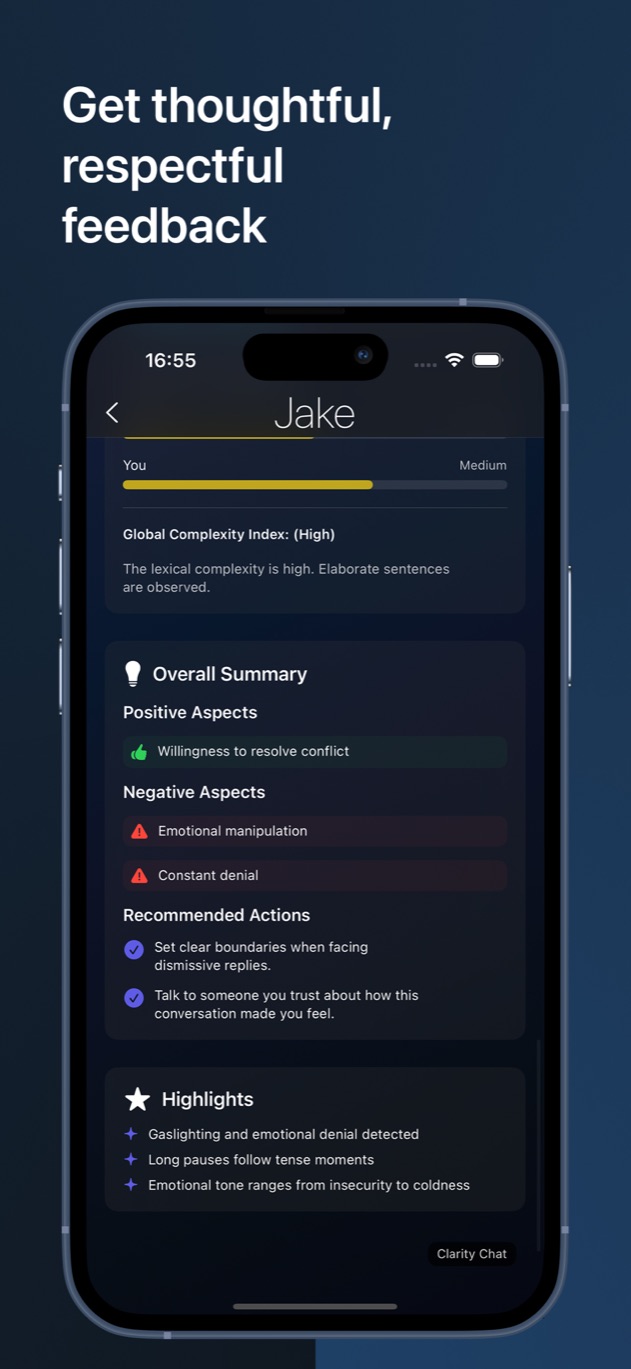
Clarity Chat can organize selected messages into emotions, observed tones, examples, response patterns and possible behavior indicators. It may help when a long exchange feels too tangled to review. Include enough context to see what triggered the interaction and what happened after a boundary was stated.
The app does not know whether you are safe, whether messages were deleted or what happens off-screen. Do not show an automated report to a controlling person as proof if doing so could increase risk. Use it privately as one input and seek human guidance.
Choose support that matches the risk
For a lower-risk communication mismatch, state one specific boundary and observe the response. For example: “I do not answer messages during work. I will reply tonight.” Respectful behavior may not be perfect immediately, but it should move toward the boundary rather than punish you for having one.
If there are threats, stalking, coercion or fear, use a safe device and contact a relationship-abuse service. In immediate danger, contact local emergency services. A trusted person can also help you store evidence, plan transport or avoid facing the situation alone.
Responsible sources and support
Questions about this guide
Is frequent texting a sign of a toxic relationship?
Not by itself. Frequent contact can be mutual and welcome. It becomes concerning when it is demanded, monitored or used to punish someone for having boundaries.
What should I do if someone threatens me by text?
If safe, preserve the message and contact a trusted person or local abuse-support service. In immediate danger, contact emergency services and avoid confronting the person alone.